
Tempest
Also known as: N/A
Developer: Atari
| My Score | Avg. Score | ||||||
| 9.0 | 8.3 | ||||||
| Release Dates | |||||||
|
|||||||
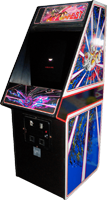


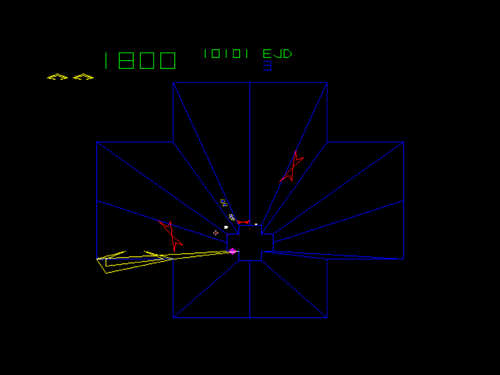
Hey, Kory May…are you reading this? This review is for you, ol' chum. For those wondering, when I was in high school, I worked at a Funcoland as it was transitioning into a GameStop. My boss, Kory May, to this day, is one of my favorite bosses that I've ever had. And somehow, even with my poor memory, I remember him telling me how he really enjoyed Tempest when he was younger…either that, or I've had one too many concussions and my brain made something up. Either way, though, this review is for Kory, dang it. Anyway, Tempest is a unique take on the popular shooter genre of the time. Most shooting games had the player controlling a ship at the bottom of the screen, shooting towards the top of the screen to murderize the poor enemies above. Tempest threw that template in the trash and gave players something fresh. Giving the player an illusion of 3D, Tempest instead has players controlling a ship that is stuck to the rails of a level. You're not able to freely move anywhere on the screen; instead, you're stuck to the outline of each level, but you're able to move anywhere on that outline, with the use of a dial to control your ship, as you fire upon the incoming enemies. Think of Tempest as a shooting game of "king of the mountain" where you're up at the top of the mountain, and your goal is to prevent the enemy ships from getting up to the top. If you aren't fast enough and some enemies do make their way to the edge of the stage with you, you need to be crafty: one wrong move and you'll find yourself pushing up daisies. Like many arcade games, the action starts slow, but quickly picks up as you advance on…and Tempest just seems to get more fun the more chaotic everything gets. That concept alone makes Tempest a very addicting game. However, to further cement itself as a shooter unlike most others, Tempest also decided to have each stage be unique. In many arcade games of the time, if you completed a level or stage, the next level or stage would basically be the exact same thing, but sped up and with increased difficulty. In Tempest, there are sixteen unique stages, all looking completely different, before they begin to loop. And when they do loop, the color scheme also changes, along with the higher difficulty, giving you a visually different experience as you advance on through the game. This really helps the player feel like they are making progress much more efficiently than just repeating the exact same stage with the exact same look, but faster. While the wireframe graphics look pretty dated today, the 3D look of the game was a very neat novelty for the time, and if you like the look of retro games, like I do, then it's still a treat to see the game in action. Overall, Tempest is one of the very best early shooting games, and at the time, it was also one of the most original. And like all great games, several decades later, it's still an excellent game to play when you've got a few minutes to kill.
Review added: 02/25/2026
Tip Top
This game is listed on this website under a different name. To access the review, please click here.
Tornado Baseball
Also known as: Ball Park (Japan)
Developer: Midway
| My Score | Avg. Score | ||||||
| 7.5 | 6.4 | ||||||
| Release Dates | |||||||
|
|||||||
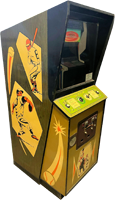
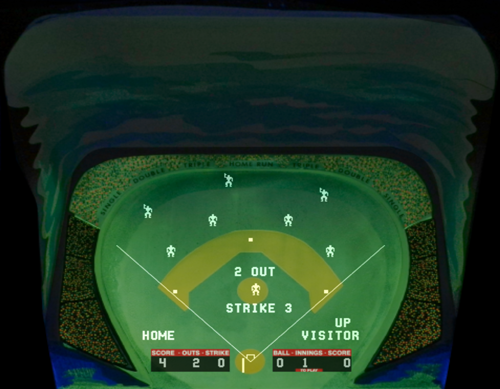
Tornado Baseball was a decent baseball game back when it was released…all the way back in 1976…though it feels like a bit of a combination of baseball and a game of video game darts. Basically, when you're at bat in Tornado Baseball, your goal is to time your swing so that you hit the ball in an appropriate area. If you're playing this game via standard emulation, that area isn't obvious, but if you're lucky enough to play this game via the original arcade cabinet, the black background is replaced with a static, colored background. On that background, you'll find labels for the numbers that appear on the bottom (the far right and left numbers are the home and visitor team scores, the second furthest left is the number of outs, the third from the left is the number of strikes, third from the right is the number of balls, and the second from the right is the inning that you're in), as well as labels up top for where to try to hit the ball. The left and rightmost edges get you a single, the next spot inward from each will get you a double, next to those will get you a triple, and if you manage to hit the ball dead center, you'll hit a home run. Being able to move outfielders and adjust your pitches is a nice touch that one may not expect from a game so old, but Tornado Baseball manages to do it. While this isn't the greatest baseball game by any stretch, Tornado Baseball is still a solid game for its time…and it was popular enough to justify a sequel, Extra Inning. If you're a fan of baseball games and want to play a simplistic but decent version of the sport, then Tornado Baseball may be worth tracking down.
Review added: 11/17/2025
Tournament Pro Golf
Also known as: 18 Challenge Pro Golf (Japan)
Developer: Data East
| My Score | Avg. Score | ||||||
| 5.0 | 5.3 | ||||||
| Release Dates | |||||||
|
|||||||
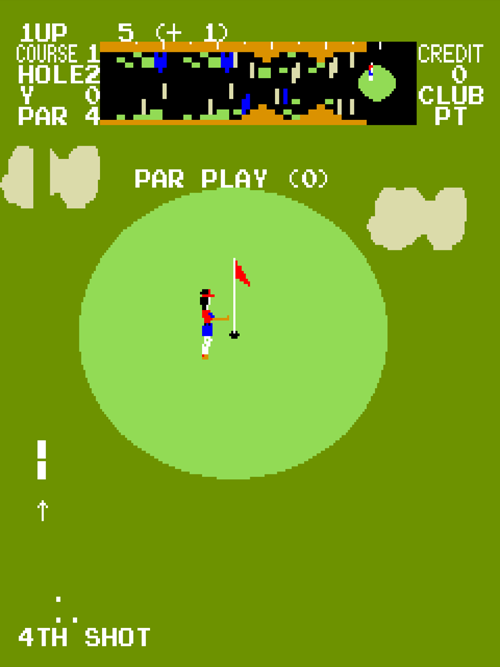
Tournament Pro Golf is one of those odd games where there's not a whole lot of information out there about it. Maybe that's because it went by a few different names. Also known as 18 Challenge Pro Golf, Tournament Pro Golf is a very streamlined game of golf. The computer picks your club automatically and even starts your swing automatically. All you really have to do as a player is point in the general direction that you want to send the ball and time your shot to the meter on the left side of the screen. Then watch the ball go flying, and repeat the process. Putting is handled in the exact same way…except you watch the ball roll towards the hole rather than fly towards it. While this whole process makes everything way more streamlined, as I mentioned, it also makes the game as a whole feel kind of shallow. You're basically just saying "aim that direction" followed by "swing now." There are hazards that can make things interesting, but for the most part, this is a game of golf that gets rather boring rather quickly. If you do decide to try to stick with it for the duration of the game, you need to at least get a par or better on each hole. If you fail to do that, then the game demands that you insert another quarter to continue playing…so if you're not particularly good at this game, or you're playing it for the first time and just beginning to understand how everything works, you get penalized financially. Having to pop another quarter in to continue a game is a standard practice in arcade cabinets…but something about that in a golf game just feels kinda weird to me. Data East streamlined the whole game here: they couldn't just charge 50 cents instead of 25 and offer 3 holes of golf for that price? Then another 50 cents to do another 3, or reward players that did really well with the last 3 by giving the next set for free? Eh, maybe I'm just in a cranky mood and everyone else just thinks that's a standard arcade game thing…either way, I didn't like it. Overall, I liked how quickly that this game is played, but the lack of any depth makes it difficult for me to consider it a passable golf game.
Review added: 04/08/2026
Tranquilizer Gun
Also known as: N/A
Developer: Sega
| My Score | Avg. Score | ||||||
| 8.0 | 6.4 | ||||||
| Release Dates | |||||||
|
|||||||
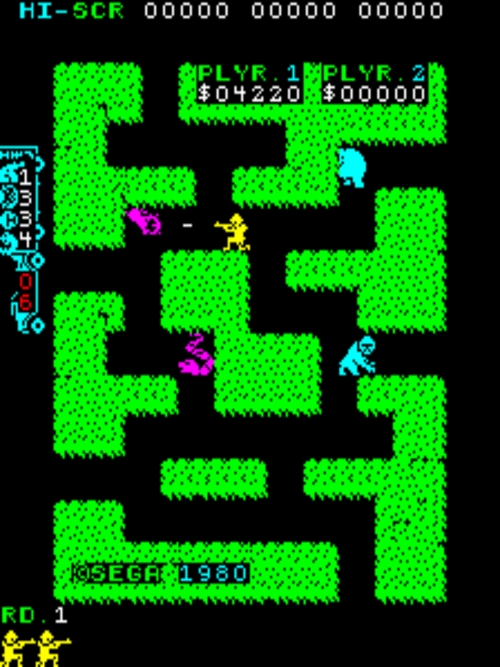
Tranquilizer Gun caught me completely off-guard. I guess I expected something like Space Invaders, but what I got instead was a really good, obscure shooting game. I believe that you control a zookeeper with the intent of passivating the animals roaming around in a maze, then dragging the animals back to your truck before they wake up. Each animal reacts differently to the tranquilizer darts that you shoot. The snake, for example, only needs one dart to go down, while the elephant requires several. While navigating the hedge labyrinth, the animals will walk into the hedges and reappear elsewhere in the maze, sometimes right next to or on top of you, so there's always a threat of danger, even if you've successfully caused one of the animals to take a nap. You can also drive your truck around all four corners of the maze, giving you easier access to an area that the animals have seemingly taken a liking to, so you don't have to drag their sleeping bodies through the entire maze to get back to the truck. It's a pretty simple game, but it's also a very interesting twist on the shooting genre that, in 1980, was still dominated by Space Invaders clones. Tranquilizer Gun was later released under the name of Safari Hunting and ported to the SG-1000 home console. You can also find it in the Dreamcast version of Dynamite Cop as a bonus game. Anyway, while Tranquilizer Gun isn't the greatest game ever made or the best shooter of its time, it has a nice combination of strategy, skill, and action…it kept me hooked much longer than I had anticipated, and I think if you give it a shot, pun intended, it'll likely do the same for you as well.
Review added: 03/02/2026
Treasure Island
Also known as: N/A
Developer: Data East
| My Score | Avg. Score | ||||||
| 7.0 | 7.0 | ||||||
| Release Dates | |||||||
|
|||||||

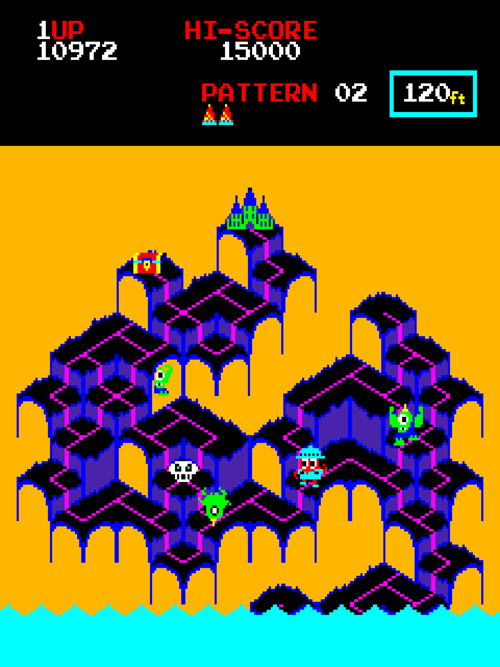
Treasure Island is an isometric maze game where you control an explorer who is named Explorer, ironically enough. Poor Explorer seems to always find himself on islands that are sinking into the ocean, and his goal is to climb his way to the top of the island before he gets submerged in the sea. Climbing basically involves you navigating a fairly simple maze, and maneuvering your way through tunnels. Essentially, you're stuck to walking a trail on the island, so you just follow the trails until you either hit a dead end, or you find your way to continue on via tunnels. However, it's not as simple as just getting Explorer to the top…is it ever? Along the way, you'll encounter monsters that don't seem to care if they drown so long as they make you drown with 'em. They'll block your path and/or chase after you while you gradually make your way to the top of the sinking island. Oh, and let's not forget about the skulls, either. Supposedly, these skulls contain poison so potent that they kill you instantly, so touching a skull is not a good time for ol' Explorer: you should probably avoid them on the climb up as well. You'll also want to be careful with tunnels: sometimes you need to use them and/or sometimes they can provide a good escape route when in danger…but other times, they can lead to cheap deaths when enemies appear right as you enter or exit a tunnel…it can be somewhat annoying, but it also adds a sense of danger around any corner, if you care to look at it that way. Your reward for making it to the top? You find yourself on another, larger sinking island and get to repeat the process all over again. Overall, Treasure Island isn't a bad game, and it'll likely keep folks engaged as long as their quarter lasts. Unfortunately, there were much better games out there for the time, so Treasure Island probably wouldn't have been one of the first games that you'd want to play if given the choice.
Review added: 04/09/2026
Turbo
Also known as: Indianapolis (Bootleg)
Developer: Sega/Germlin
| My Score | Avg. Score | ||||||
| 8.5 | 8.0 | ||||||
| Release Dates | |||||||
|
|||||||
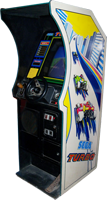
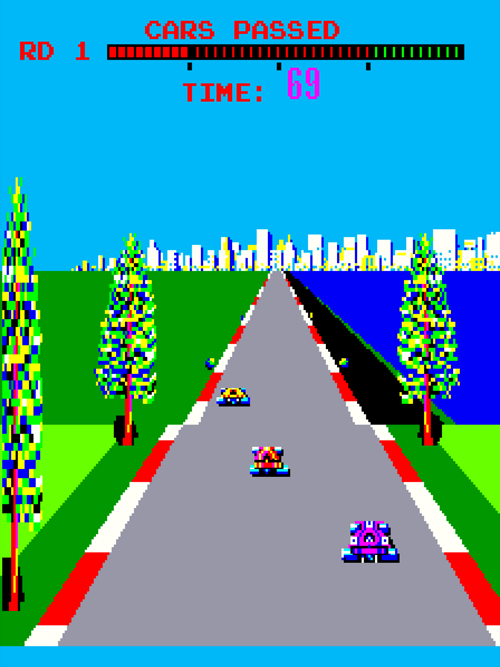
Turbo was an arcade game released by Sega/Gremlin in 1981, where the concept of the game is to drive a Formula 1-looking race car (in a behind-the-car, third-person perspective) through various environments, weather conditions, and times of day. Aside from competing with weather and environmental hazards, you've also got the goal of passing and staying ahead of at least 30 competing cars before the time limit expires. If you fail to do so, it's game over. Likewise, while you have unlimited lives in the first round, every round afterward, you're limited to two lives…and ironically, the life-saving ambulance that barrels through the screen from time to time is a major threat that will instantly cause you to lose one of those lives if it makes contact with you. The bare concept of Turbo is fun on its own, but I'm going to mention the weather and environmental hazards again because that's where the game really shines. Turbo always keeps you on your toes…whether it be that the mostly-straight track suddenly starts twisting and turning, the wide roads become narrower, or you've entered a snowy area with poor traction, it's always fun trying to navigate the roads and pass as many cars as possible. Turbo isn't perfect, however, with one big flaw being how the scenery around you often changes without much warning…you may be driving down a road full of grass and trees…then suddenly, you find yourself on a turn with an ocean view on one side and a wall on the other. These jarring segues from one environment to the next can really throw you off the first time that you play. It feels like there could have been smoother ways to transition between these areas…but taking the rest of the game into consideration, and how fun it is, that feels like a minor gripe. If you want to play a solid arcade racing game, Turbo may have been the first great one.
Review added: 04/09/2026