
The DECO Kid
This game is listed on this website under a different name. To access the review, please click here.
Deep Scan
Also known as: N/A
Developer: Sega
| My Score | Avg. Score | ||||||
| 6.5 | 5.8 | ||||||
| Release Dates | |||||||
|
|||||||



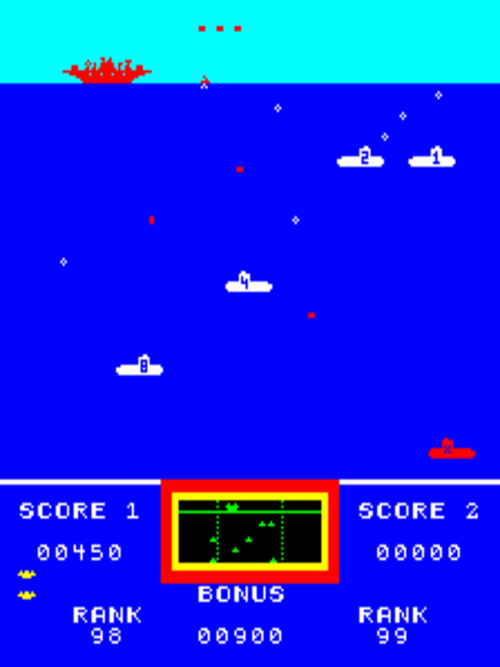
The concept of Deep Scan is solid enough…take the typical space shooter from the time, flip it upside down, and have the player battle enemy submarines instead of spaceships. That may be oversimplifying it a tad, but it's not too far off. In Deep Scan, you control a ship floating in the ocean, at the top of the screen. However, navigating the waters below are enemy subs which send mines floating to the top that, apparently, explode as soon as they sense fresh air after hitting the surface. Your goal is to avoid those mines while you play. You're not defenseless, though. You've got the ability to drop bombs that slowly sink down below. The catch? You can only send a certain number of bombs down at a time, so you've got to be strategic about when you decide to blow up an enemy ship or leave them be. Likewise, since the bombs only go straight down, you need to get the timing down to be able to "drop the bomb," as the kids say, and have it hit one of the enemy submarines…until you get that timing down, it'll be pretty common to drop a bomb (or several) at an enemy, just for them all to pass by, just in front of or just behind their sub. Also, if you survive long enough, much like in some other shooters, a red submarine will eventually appear at the bottom of the screen. If you manage to bomb that fella, you'll net yourself plenty of points. The downside to the game, however, is that it can be painfully slow in the beginning while you wait for subs to appear…it does eventually get frantic and hectic, but it takes some time to get to that point. If it got to the more frantic gameplay a little quicker, I think it would have gone a long way. Anyway, Deep Scan is still a solid game in arcades. It was later ported to the Atari 2600 as Sub Scan, but this arcade version is the better choice if you can only play one or the other.
Review added: 11/06/2025
Defender
Also known as: N/A
Developer: Williams
| My Score | Avg. Score | ||||||
| 9.0 | 8.2 | ||||||
| Release Dates | |||||||
|
|||||||

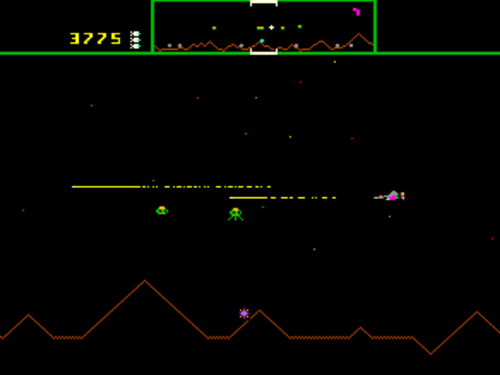
I think Defender intimidated a lot of people when it first came out. Up until Defender, most arcade games had some difficulty, but it wasn't anything that couldn't be overcome with some minimal practice. Defender, however, ramped up the challenge…and rather than avoid that challenge, players in arcades seemed to welcome it with open arms. Defender would become Williams Electronics' best-selling arcade cabinet and one of the highest-grossing arcade games in history. Essentially, Defender is a scrolling shooter, where you can move your ship to scroll left and/or right while also moving the ship up and down on the screen to line up shots with the enemy, or to dodge shots fired by the enemy. You start with three "smart bombs" that can destroy all visible enemies on the screen, and you've also got a "hyperspace" button that will warp you to a random part of the screen. Both methods can be very helpful in situations where you get overwhelmed…though the hyperspace option can sometimes put you in worse danger, so it's best used as a last resort. Your goal is to destroy all alien invaders while protecting astronauts on the landscape from being abducted. If an astronaut gets abducted and is taken to the top of the screen, they become a mutant, which must be eliminated. If you manage to shoot down a ship that was abducting an astronaut, you then need to catch them as they fall back towards the planet and fly them down to safety. If you can defeat all aliens, then you advance to the next level. If you fail to protect the astronauts, however, then you'll be faced with a destroyed planet and a few waves of mutants…after the mutants have been destroyed, however, the planet is restored and you'll advance on as normal. Switching your focus between being offensive to shoot down the enemy and defensive to save the astronauts is the key to survival in Defender. However, Defender isn't exactly a pick-up-and-play game. You'll likely die shortly after putting your first quarter in, while you get adjusted to how the game controls and how fast it is when compared to other games of the time. After putting some time into it, though, like most games, you'll find yourself getting better and better…though one could argue that Defender took longer to get better at than most of the games that came before it. Still, Defender is one of the best-remembered games from the early days of video games and one that showed the game industry that folks popping those quarters in were hungry for something a bit more challenging than they had been used to playing.
Review added: 02/24/2026
Dig Dug
Also known as: N/A
Developer: Namco
| My Score | Avg. Score | ||||||
| 9.0 | 8.2 | ||||||
| Release Dates | |||||||
|
|||||||
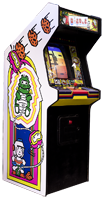
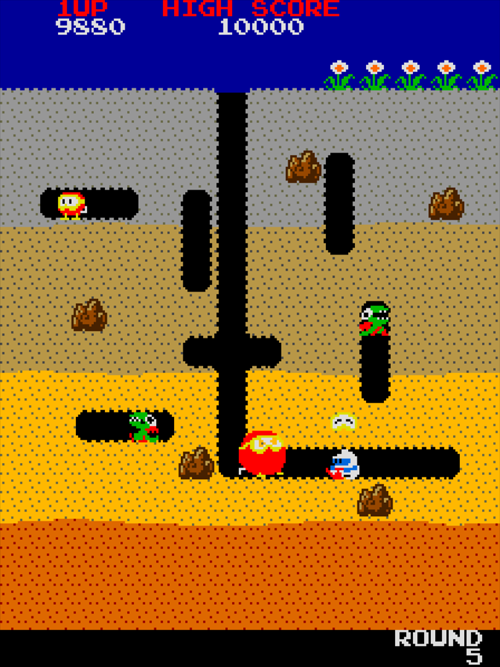
In the early '80s, especially after the worldwide success of Pac-Man, Namco was the king of the arcades. While not every game that they developed was pure gold, they had a string of successful games that had quarters rolling in at a pretty solid pace. In 1982, they put out Dig Dug, and they had another hit on their hands : it became the second-highest grossing arcade game in Japan that year, only behind another Namco game, Pole Position. In North America, by the end of 1982, Dig Dug had over 22,000 arcade cabinets distributed, with them taking in a whopping $46,300,000 USD…that's a lot of quarters. With current inflation, you can multiply that amount by three to get a rough estimate of what that would be in today's money. And, like most successful games, Dig Dug also inspired a fad of "digging" games : the most notable being Mr. Do! and Boulder Dash. Anyway, enough with the history lesson : if you're somehow not familiar with Dig Dug, here's the concept of the game. You control Dig Dug (Taizo Hori in Japan) as he digs through the ground to collect what the arcade flyer describes as "veggie treasures." Those veggies only appear in each round for about ten seconds, too…so you need to pick them up as soon as possible if you want to rack up the points. Along the way, you've got Pookas and Fygars to contend with. Pookas are the little round creatures wearing goggles. Fygars are the dragon-like creatures that can breathe fire and whose flames can pierce the dirt to kill ol' Dig Dug, even when he appears to be safely behind a wall. To fight back against these creatures, you've got the ultimate weapon…a bicycle pump. Dig Dug uses the pump to fill his enemies full of air until they explode. Alternately, Dig Dug can also let the monsters chase him through the dirt, and if timed properly, you can activate rocks to drop and crush those poor creatures…or yourself, if you're not careful. Each stage ends when all of the monsters are either destroyed, or if they flee in terror from that horrifying bicycle pump. Dig Dug is a classic example of good game design : easy to pick up and play, but difficult to master. While Dig Dug never quite reached the popularity of Pac-Man, it was still a wildly successful game that still holds up well today.
Review added: 08/04/2026
Digger
Also known as: Heiankyo Alien (Japan)
Developer: Denki Onkyo
| My Score | Avg. Score | ||||||
| 8.5 | 6.7 | ||||||
| Release Dates | |||||||
|
|||||||

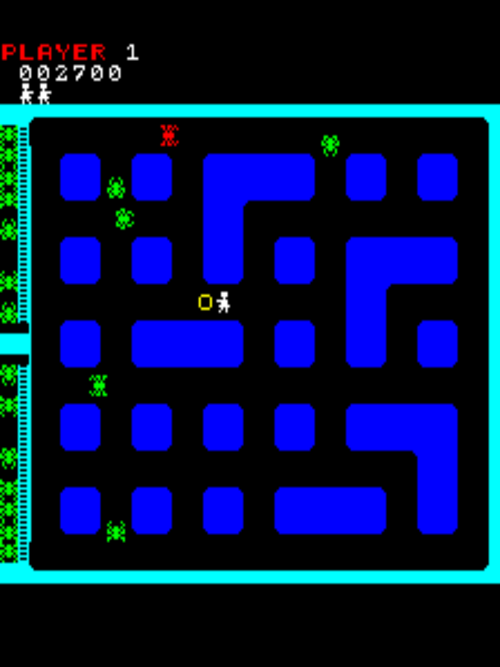
I've listed this game as Digger because that was its North American release name, but it found much, much more success in Japan under the name Heiankyo Alien. In fact, when an updated variation of the game returned to North American shores on the Nintendo Game Boy, it stuck with the Heiankyo Alien name. Anyway, regardless of what you call it, this is a very well-made, obscure game that doesn't seem to get enough credit here in the West. Meanwhile, over in the Land of the Rising Sun, Heiankyo Alien cracked the top 10 grossing games in arcades in both 1979 and 1980. The North American name of "Digger" comes from how the game plays. In this game, you'll find yourself in a maze with a few enemies. The goal is to dig holes to trap the enemies in, then close the holes up before they can escape. According to the Japanese instructions, you're basically luring the alien enemies into holes, then burying them alive. That doesn't sound like something very kind to do to a visitor. Anyway, digging a hole isn't as simple as hitting the button once : you've got to hit it three times to get the hole big enough. If any enemies make their way over before you can get that hole large enough, they'll cover it up and you'll have to start from scratch. The concept is to try to guess the movements of the aliens and dig holes to leave in their path…but you can't just settle for stalking the aliens one by one. If you do, a swarm of aliens will fill the maze after a set period of time, basically making it nearly impossible to complete the level. So, you'll find yourself digging holes, then walking away to dig more holes…then frantically running back when an alien falls in a hole so you can cover that hole up before they manage to escape. It's a simple game with a very addicting concept. While it may not have been as popular in the West as it was in the East, Digger is still a very, very well-made game and well worth playing if you've got an opportunity to do so.
Review added: 02/22/2026
Disco No. 1
Also known as: N/A
Developer: Data East
| My Score | Avg. Score | ||||||
| 6.0 | 6.7 | ||||||
| Release Dates | |||||||
|
|||||||
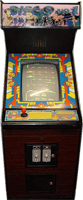
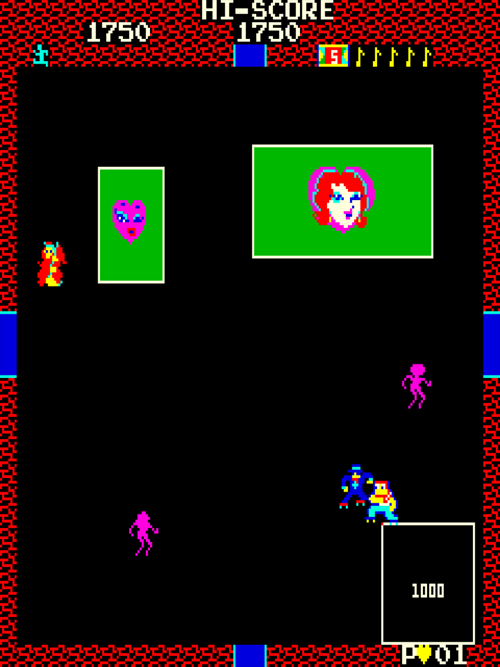
Show me a weird concept for a video game, and I'll usually want to play it immediately. Well, when I first saw Disco No. 1, it was no exception to that rule. Disco No. 1 is an action game where the goal is to draw boxes around all of the characters on the screen. Since the game takes place on a dance floor, naturally you'll be drawing boxes around such characters as Disco Girl and Beauty Queen…but there are Ruffians and Witches there to also get their groove on. The Disco Girl and Beauty Queen are both fairly easy to draw the box around**, though if** they, or anyone else, touch the lines that you draw before the box is complete, then the box disappears. The Ruffians are the annoying bunch of the game : they will pursue your character, "your playboy," according to the arcade flyer, and will often be the cause of boxes not being completed. There is a red button on the arcade cabinet, though, and while you have a limited number of times that you can use it, hitting that button will freeze the Ruffians, allowing you to quickly draw some boxes around them to get them out of your hair. The Witch, however, is not affected by the red button. She appears after the game has been in play for a while, and if she manages to link up with the line that you're drawing, she will speed up and follow that line towards you. The only way to avoid her at that point is to turn out and away from the square that you are drawing. This will stun the Witch and allow you to draw a box around her and her broom. While all of this is happening, if the playboy touches any wine or glasses on the screen, his speed will increase, which can help with wrapping those boxes up before someone causes them to be interrupted. Disco No. 1 isn't the greatest arcade game by any stretch of the imagination, but I found it to be a passable, quirky game. If you want to tell a D.A.R.E. officer (are those still around?) that you've been doing lines on a dance floor, and have him not be disappointed by your actions, then Disco No. 1 is the game for you.
Review added: 08/04/2026
Dodgem
Also known as: N/A
Developer: Zaccaria
| My Score | Avg. Score | ||||||
| 6.5 | 6.1 | ||||||
| Release Dates | |||||||
|
|||||||
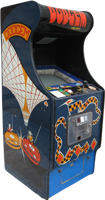
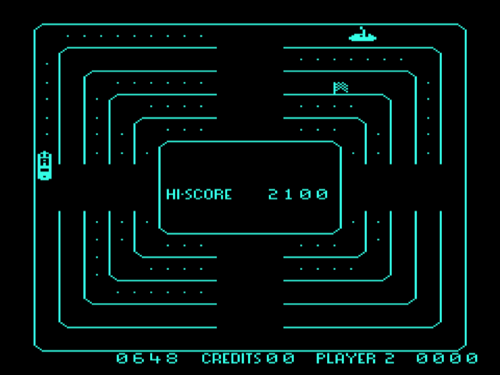
I played Dodgem since I thought it was the arcade version of the Astrocade game of the same name…and it's a completely different title. Whereas the Astrocade game, released in 1978, was all about avoiding an assortment of cars on a freeway, this version of Dodgem, developed and published by Zaccaria instead of Bally Midway, was released in 1979 and is a variation of Sega's Head-On. The idea of Dodgem is that you want to drive around a stage and collect all of the lines in a level and pick up any flags that appear for bonus points along the way. The catch? There's another vehicle also driving around, and its goal is to crash right into you. Thankfully, though, there are a few different lanes for you to drive in, so the key to surviving is to swap lanes frequently. The suicidal car will always change lanes to be in the lane that you're in, though, so you need to plan accordingly. You do also have the ability to put the pedal to the metal and boost yourself forward, rather than move at the default pace, so if it looks like you're doomed, you may be able to hit the gas and squeeze your way out of danger. The downside is that once you figure out a pattern, this game isn't too difficult…so there's not much of a reason to come back for more. Overall, Dodgem is a pretty forgettable arcade game, especially since Head-On came before it and Head-On 2 is better than it…however, it was still passable for its time. Just don't expect to spend too much time with it, especially if you've played a bunch of Head-On or Head-On 2 before.
Review added: 11/09/2025
Dolphin Blue
Also known as: N/A
Developer: Sammy Studios
| My Score | Avg. Score | ||||||
| 7.5 | 7.9 | ||||||
| Release Dates | |||||||
|
|||||||
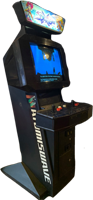
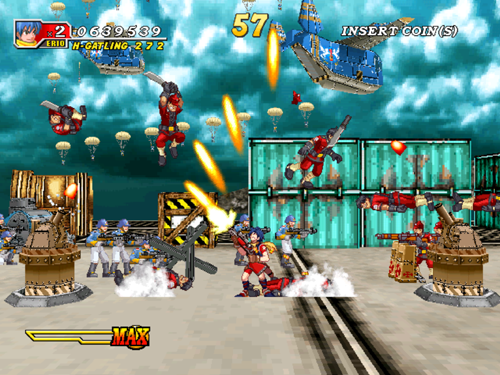
I like Dolphin Blue, but for the same reason that I like it, I also feel like I have to dock my score for it a tad. Basically, Dolphin Blue is a game very much like Metal Slug…and if you've seen my reviews on the Metal Slug games, you'll probably know that I adore those run-and-gun shooters. So, obviously, when I started playing Dolphin Blue and realized it was a run-and-gun shooter with plenty of explosions, plus a dolphin buddy that helps you make things explode, I was sold. The downside, though, is that it's so similar to Metal Slug that it doesn't have a lot of unique ideas…and it doesn't do the Metal Slug formula as well as Metal Slug does. One thing that does separate the games is the dolphin pal that I mentioned. Instead of having grenades, like in Metal Slug, you've instead got a meter at the bottom of the screen. You can activate special moves when that meter is filled up enough…usually involving the dolphin, but in the non-dolphin areas of the game, your character will do a special move instead. Also, while the game itself is still difficult, it's a little more forgiving in that if you die while armed with a special weapon, when you revive, you've still got that weapon. Unfortunately, as I said, this game doesn't do the Metal Slug formula as well as Metal Slug…and much of that is because of the personality. Metal Slug oozes personality from nearly every aspect of the game…and Dolphin Blue simply doesn't. Dolphin Blue is a neat take on the Metal Slug formula, with different visuals, but with that lack of personality, I simply didn't enjoy myself playing this as much as I would have hoped. I'm glad I played through it. I still think it's a decent game, but I'll be returning to Metal Slug in the future rather than Dolphin Blue.
Review added: 11/14/2025
Dominos
Also known as: N/A
Developer: Atari
| My Score | Avg. Score | ||||||
| 7.0 | 6.5 | ||||||
| Release Dates | |||||||
|
|||||||
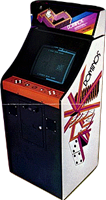
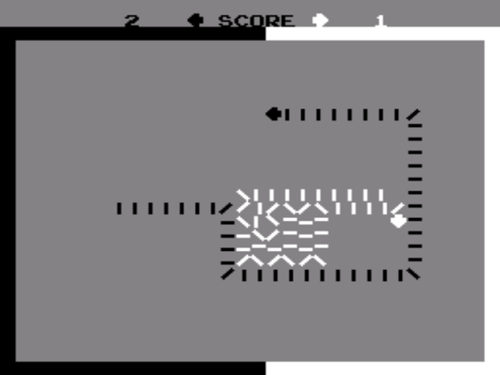
Dominos is a two-player game where each player controls an arrow. Once the game begins, the arrow is constantly in motion, and it leaves a trail of dominos behind it. The goal is to make your opponent bump into either your trail of dominos or their trail. Regardless of which trail they bump into, their dominos will then begin to tumble….or yours, if you're the one that did the bumpin'. While it's kind of neat to see those dominos fall the first time, this is a game where you have to cause your opponent's dominos to topple a few times before you're declared the victor. If you've got two skilled players against each other, and they fill the screen up with dominos, then they're stuck sitting there for a while as the dominos topple over after one finally crashes into a trail. The game, like many arcade games, starts slow, but speeds up as the game goes longer, making it more difficult to "time" your turns. You may think that you're timing a turn just right to trap your opponent, and find yourself crashing into their stack of dominos or turning too early and leaving a gap for them to escape through. My only real complaint about the game may not even be valid: Checkmate is a similar game that also came out in 1977, but I don't know when. It has this gameplay, but for four players battling against each other, which is significantly more fun. If Checkmate came out first, then Dominos is slightly disappointing. If Dominos came out first, which I believe is the case, but have no proof of, then it's a solid game that influenced a better game that came out later that year, Checkmate. Either way, if you've got a friend to play against (or just want to battle against a computer-controlled opponent), Dominos can be decent fun for a few minutes.
Review added: 02/25/2026
Donkey Kong
Also known as: N/A
Developer: Nintendo
| My Score | Avg. Score | ||||||
| 9.0 | 9.0 | ||||||
| Release Dates | |||||||
|
|||||||

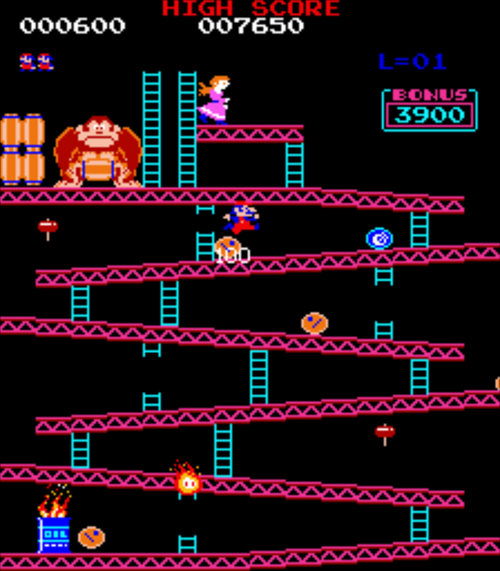
Fun fact: Donkey Kong’s strange name came from Shigeru Miyamoto using a Japanese-English dictionary to find different words to use for the term “stubborn gorilla.” And much like a stubborn gorilla (some folks call me “ape,” you know), I find myself frolicking over to this gem every time I visit my local arcade…or any arcade that has this masterpiece available to play, for that matter. Donkey Kong is probably most famous for introducing players to two of the most iconic video game characters of all time: Donkey Kong and Mario. However, just as importantly, it was the first great platformer to ever be released. It, perhaps, was the main reason for Nintendo gaining the momentum toward becoming the powerhouse that they would be in just a few short years. The Colecovision’s port of Donkey Kong helped give that console some traction in sales, and in Japan, Nintendo used a port of Donkey Kong to help sell their brand-new Famicom system. While both ports are well done, there’s still just something about popping some quarters in a machine, trying to grip a joystick covered in pizza grease, and entering your initials when you’ve broken into the top scores of the area. Like most great games from the past, Donkey Kong is still just as fun to play today as it was back when it was released nearly four decades ago.
Review added: 07/16/2019
Donkey Kong Junior
Also known as: N/A
Developer: Nintendo
| My Score | Avg. Score | ||||||
| 9.0 | 8.1 | ||||||
| Release Dates | |||||||
|
|||||||
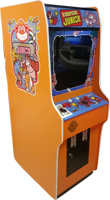
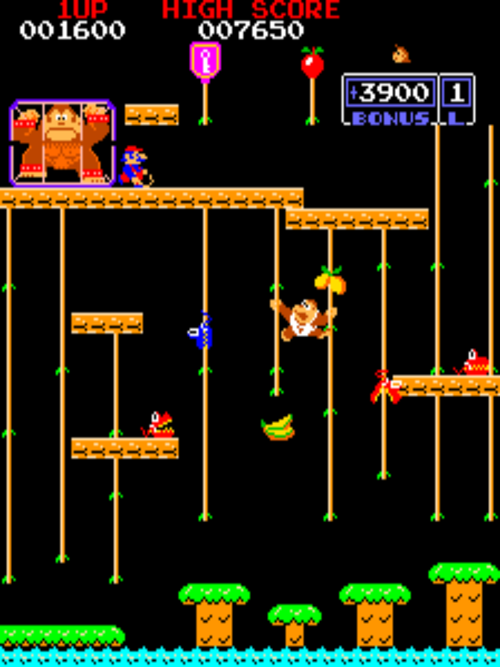
With the success of Donkey Kong, I bet most people suspected that Nintendo would follow that game up with a sequel. What I don't think those folks expected was that the sequel would see the game star Donkey Kong's son, that the villain would be Mario, and that the mighty Donkey Kong would be confined to a cage and need to be saved. They also may not have expected the gameplay to be quite a bit different, while still maintaining the same basic concept. Your goal is still to make it to the top of the screen. However, in Donkey Kong Junior, many of the platforms have been removed…good thing that ol' DK Junior is a vine-climbing ape, then. There's much more climbing here than in the original game, which I adored as a child. To me, just climbing around was fun by itself. I also enjoyed the weaponry in this game a bit more: a hammer is nice, but it's a bit more rewarding to instead time your actions (or just plain get lucky) to be able to drop a piece of fruit on the craniums of a few enemies with a single drop. Speaking of enemies, there are new ones here. Snapjaws are the little alligator-looking turds that can move on both platforms and vines. Nitpickers are the birds that fly across the screen, sometimes dropping eggs. Sparks are…well, sparks, that make their way across the wiring in one of Mario's hideouts. The new way to navigate to the top of the screen, along with the new enemies and the new hero to control, all made Donkey Kong Junior a hit at the arcades just as the original had been before it.
Review added: 08/05/2026
Dora-chan
Also known as: N/A
Developer: Craul Denshi
| My Score | Avg. Score | ||||||
| 5.0 | 5.4 | ||||||
| Release Dates | |||||||
|
|||||||

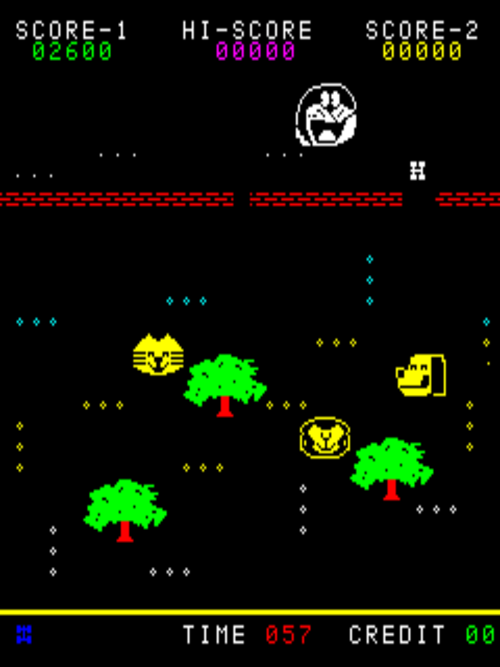
Dora-chan is kind of an odd game…it was pulled from arcades shortly after it was released…the belief is that they did not have the license to use the name or likeness of popular manga and anime star Doraemon. And if I got it wrong about Doraemon being in both manga and anime, well, that's because I'm not really a fan of either media type…and since I don't know anything about manga or anime, it's telling that I am still familiar with Doraemon. While I don't live in Japan, I imagine it's like someone here in the United States not liking or watching any cartoons, but still knowing about the character of Mickey Mouse or Bugs Bunny. Anyway, once the game begins, it's not really anything special…your goal is to pick up pellets in the level while avoiding all of the angry animals. At the top of the screen is a wall with a moving hole in it. Doraemon's decapitated head is floating around behind that wall, too…if you make your way through that hole in the wall without being eaten by the animals, you can then control the severed cranium of Doraemon as he shoots at those animals with righteous fury and vengeance. I just made it sound a whole lot more exciting than it actually is. There's also a rumor that the developers, Craul Denshi, had made a clone of this game, starring the sister of Doraemon, Dorami, but all copies were destroyed. Perhaps learning from their mistake of participating in copyright infringement, Craul Denshi developed more legitimate games going forward and changed their name to Alpha Denshi. Dora-chan isn't THAT bad that a name change was required to avoid being blamed for its release, but honestly, there's not really a whole lot that's good here, either…it's essentially just a subpar game with an alleged illegal use of a licensed property. Unless you're a Doraemon nut, there's not really a reason to play this game.
Review added: 03/02/2026
Dragon's Lair
Also known as: N/A
Developer: Advanced Microcomputer Systems
| My Score | Avg. Score | ||||||
| 8.0 | 7.2 | ||||||
| Release Dates | |||||||
|
|||||||
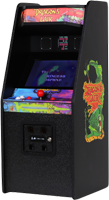
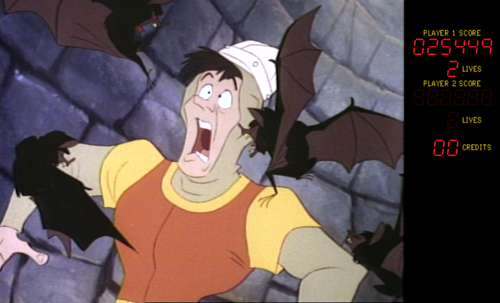
Back in 1983, video games were starting to look a bit more sophisticated than they had in the 1970s, with nicer graphics, sounds, and visual effects….and then Dragon's Lair came out and absolutely blew everyone away. Dragon's Lair was essentially an interactive cartoon. You direct Dirk the Daring through a castle with the goal of helping him rescue Princess Daphne from the evil dragon known as Singe. As the fantastic-looking cartoon plays on the arcade screen, it's up to the player to determine when to move in a specific direction and when to attack. Failure to choose the correct action at the correct time results in the player seeing one of the many, many entertaining death scenes for poor ol' Dirk the Daring. However, if you're able to memorize what needs to be done in each stage, and find your way to the final dungeon, where Singe is napping with the lovely princess trapped nearby, you'll find yourself in a short battle with the fire-breathing beast, with Dirk slaying the dragon and getting a big ol' smooch from Princess Daphne. While undeniably stunning visually, and very amusing as a novelty game, Dragon's Lair isn't exactly a well-designed experience. Some "trigger points" when you need to move Dirk are so small that it can become frustrating: or in worst-case scenarios, you try to move where you think you should, fail, then assume that you were wrong and try other things…only to find out that you were correct the first time, but your timing was just off. Once you figure out the correct timing for each stage, as well as what to do, Dragon's Lair then begins to feel a bit dull, as you're watching a video just to time button presses or joystick movement…and since the various demises of Dirk are more entertaining than the majority of what you see when playing, Dragon's Lair just doesn't feel nearly as rewarding to play as other games of the time. Still, though, Dragon's Lair is still well worth playing through for the novelty of it…and honestly, if you're a fan of old, hand-drawn animation like I am, then Dragon's Lair is still an absolute treat to look at, even four decades later.
Review added: 02/24/2026
Dump Matsumoto
This game is listed on this website under a different name. To access the review, please click here.