
Pac-Gal
This game is listed on this website under a different name. To access the review, please click here.
Pac-Man
Also known as: Puck-Man (Japan), Hangly Man (Bootleg), Ghost Muncher (Bootleg), Munchyman (Bootleg)
Developer: Namco

| My Score | Avg. Score | ||||||
| 9.5 | 8.5 | ||||||
| Release Dates | |||||||
|
|||||||



A study would have to be done to confirm this, but I'd be willing to bet a decent sum of money that, despite other game characters surpassing Namco's yellow mascot over time, including a certain Italian plumber, Pac-Man is still the most recognizable character in video game history. A lady that I used to work with, who does not know anything about video games, knew what Pac-Man was...and she had fond memories of playing the arcade game on dates when she was younger. Heck, back in the day, even the ghosts (Blinky, Pinky, Inky, and Clyde) were household names. But anyway, Pac-Man is one of those very rare titles that if you have a young kid play it today, they're likely to understand why people loved it back when it was released. Pac-Man was designed so well that it seemingly doesn't age. That doesn’t happen often, mind you. When given games to play from the early days of video games, younger folks often wonder why anyone would enjoy them. Eating pellets and running away from ghosts is an activity that all generations seem to universally find enjoyment in. All that said, the AI followed set paths, making this game easy to beat if you've managed to memorize them...But that's honestly the only real flaw that I can think of. Ms. Pac-Man improves on the formula found here to about as perfect as one could get...But Mr. Pac-Man is still pretty dang great and has aged incredibly well over the nearly four decades since he originally was released.
Review added: 07/17/2019
Paradise
Also known as: N/A
Developer: Yun Sung

| My Score | Avg. Score | ||||||
| 5.0 | 5.6 | ||||||
| Release Dates | |||||||
|
|||||||

Paradise is basically Qix…but with topless lady folk and a mild twist on the formula. That twist is that instead of trying to clear the entire board, you’re really only trying to clear the silhouette of the lady in the background. As you unveil her, she’s a green tint…probably because, like the Hulk when he becomes enraged, she’s quite angry that you’re playing this game. Anyway, you don't need to clear ALL of her silhouette most of the time, just a certain percentage of her. Once you get that specified percentage of her revealed, then all of the enemies on the screen die and you get rewarded with the green photo becoming a color photo. I like to imagine that the enemies on the screen are all basement-dwelling fellas that have never talked to a lady before, so once you reveal her, they don't know what to do and simply faint from the stress that you've caused. Also worth mentioning are the bizarre bonus games that pop up…like match the convict’s footprint. How matching the footprints of criminals ties into this game is beyond me…unless, of course, you consider that it’s a crime that this game was released instead of something that relied more on gameplay and less on boobs…in which case, match those footprints away, amigo. In fairness, though, since Qix is a decent game and this is a clone of it, Paradise is still one of the better adult-oriented games that I’ve played…but that really isn’t saying much.
Review added: 10/19/2019
Phoenix
Also known as: N/A
Developer: Amstar
| My Score | Avg. Score | ||||||
| 9.0 | 8.2 | ||||||
| Release Dates | |||||||
|
|||||||
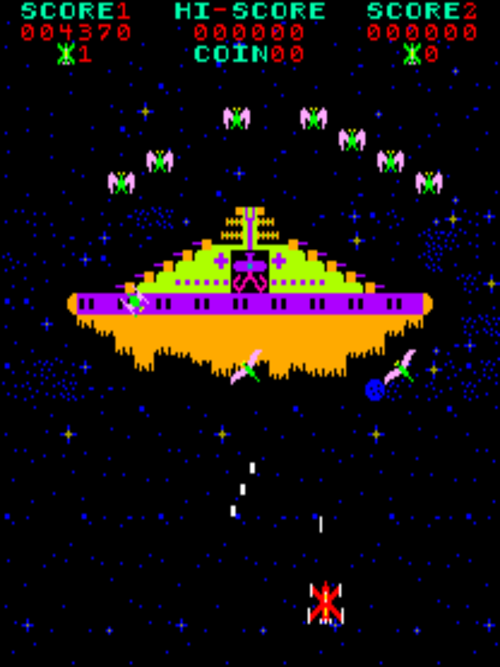
I've known about Phoenix and briefly played Phoenix before…but I never really appreciated this game until I sat down and gave it the time for a proper review. At first glance, it's easy to write Phoenix off as a Space Invaders clone with elements of Galaxian (which had been released earlier in the year) mixed in. However, Phoenix takes everything a little further. Phoenix consists of five stages that loop. The first two stages are similar to typical Space Invaders-style gameplay, with a formation of small ships that need to be destroyed, some occasionally diving down towards your ship, like you'd see in games like Galaxian. In the next two rounds, you'll see eggs on screen. The goal is to quickly shoot as many as you can, because if you wait too long, the eggs hatch and you're left shooting at some full-grown phoenixes…which must not have a high life span if they mature into an adult that quickly. Anyway, these phoenixes, for added strategy, can only be killed if you shoot the body. If you hit their wings instead, the phoenix will remain on screen and eventually regenerate its missing wing(s) until you manage to end its suffering. Once you finish two rounds of being attacked by those giant space birds, you get to the final stage, which really made Phoenix stand out: a boss battle against a giant UFO, where you'll find yourself chipping away at the bottom of the ship while avoiding enemy fire and the small ships dive-bombing you. This is one of the first boss battles in a shooter, and considering that the UFO takes up roughly a quarter of the screen, it's a pretty memorable one. If that was all that Phoenix had to offer, it would still be a great game…but on top of everything else, Phoenix also introduces the ability to use a force field to protect yourself from enemy attacks. The force field only lasts for a few seconds, then takes a while to recharge before it can be used again, but it's a nice option to have when you find yourself in a situation where you're about to get blown to smithereens. Put everything together and you've got a game that took everything from the shooters that came before it, improved upon those things, and added a few bells and whistles to make it stand out on its own. If you enjoy older shooters and never gave Phoenix a try, I definitely recommend tracking a cabinet down and giving it a try.
Review added: 02/23/2026
Play Girls
Also known as: LA Girl (bootleg)
Developer: Hot-B
| My Score | Avg. Score | ||||||
| 7.0 | 7.3 | ||||||
| Release Dates | |||||||
|
|||||||
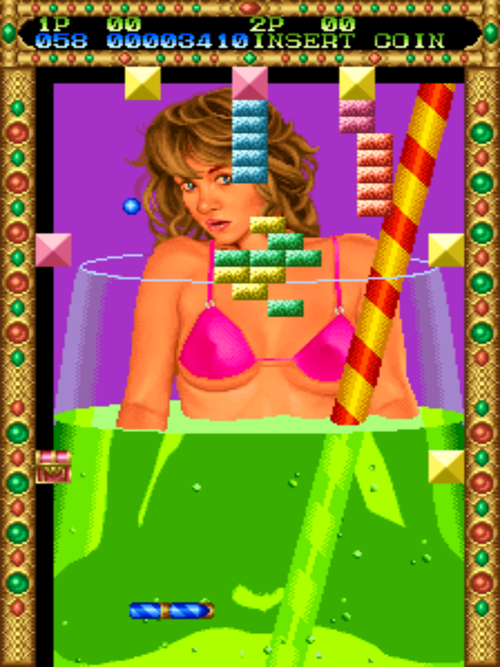
Play Girls was a pleasant surprise…I honestly expected a lame, adult-oriented game with a focus on pervy stuff instead of gameplay. While Play Girls isn't perv-free in terms of content, there's zero nudity here, at least from what I saw while playing. Essentially, you're playing Breakout, with the goal of clearing the screen of blocks so that part of the picture is revealed. It initially looks like you're playing to see perverted material, but you quickly find out that you're just playing to reveal a harmless drawing of a female. One image (the second level) in particular contains a woman sitting in a drinking glass with a straw, with liquid up to her shoulders. I guess as you complete each level, you take a victory drink to lower the liquid level? As you do, you find her wearing a bikini. So, yes, it's questionable why a woman would be lounging around in a beverage like it's a pool…and why you'd be drinking said beverage since some people find it acceptable to pee in pools…but, for the most part, Play Girls is mostly harmless. Aside from the typical Breakout gameplay, there is also an assortment of power-ups, power-downs, and point boosts to get if you can manipulate the ball to bounce over to a treasure chest in the level…including the ability to change the paddle into a tank, ninja, or dragon with the ability to shoot away remaining blocks for a limited time, which can be handy when you just can't quite get a specific block. Overall, Play Girls isn't an awful game, and it shows that if the focus is on actual gameplay instead of pervy content, you can make one of these styles of games entertaining to play…either that, or adding a visual of a bikini-clad woman sitting in a wine glass full of Hi-C Ecto Cooler simply makes everything better…I suppose both things can be true.
Review added: 11/16/2025
Pole Position
Also known as: N/A
Developer: Namco
| My Score | Avg. Score | ||||||
| 9.0 | 8.1 | ||||||
| Release Dates | |||||||
|
|||||||
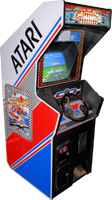
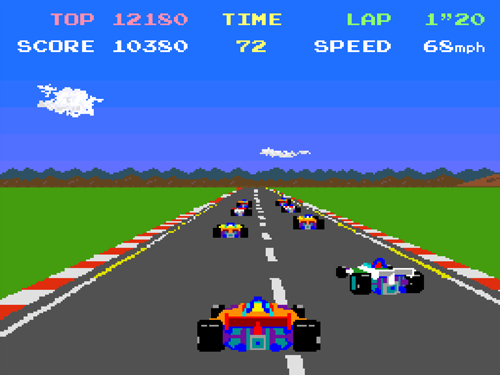
Pole Position was one of the most important games for the racing genre. Not only did the game look amazing for its time, but it's not just a pretty face: it had some substance, too. Taking place on a single track, Fuji Speedway, based on the real race course, the initial goal in Pole Position is to qualify for the race by completing a time trial lap. If you successfully qualify, then you advance on to the race, where the real fun begins. At that point, you're in the actual race, and your goal is to complete the race before the time limit expires, gaining bonus points for each car that you successfully pass. When passing vehicles, you need to be cautious to avoid colliding with them: this can cause you to lose control. There are also puddles that may make you slip and slide, as well as sharp turns that may cause your vehicle to slide a bit if you fail to slow down before attempting them. If you leave the track and attempt to drive on the grass, either on purpose or by accident, your vehicle slows down. Likewise, billboards and signs litter the sides of the track, so if your vehicle loses control and you hit a sign, your car will be destroyed, and you'll be penalized a few seconds before a new car is put back on the track for you to continue the race. While a lot of this sounds pretty standard for racing games now, much of it began with Pole Position. Pole Position was a huge hit in arcades, being a top-grossing arcade game around the world for several years, and it further cemented Namco as the king of the arcades in the early 80s, though Atari handled the publishing rights in North America. Anyway, if you're a fan of racing games, then it's worth giving Pole Position a try.
Review added: 08/11/2026
Pong
Also known as: N/A
Developer: Atari
| My Score | Avg. Score | ||||||
| 8.0 | 7.5 | ||||||
| Release Dates | |||||||
|
|||||||
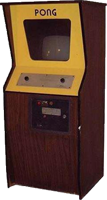
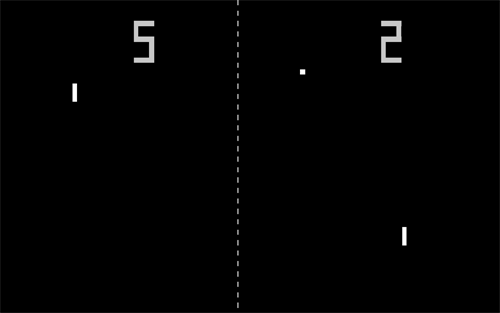
Pong wasn't the first video game, but without it, one could definitely argue whether that form of media would ever take off or not. While other games had come out before Pong, none of them were as easy to immediately pick up and play. Pong's strength is its simplicity: it only takes a moment to realize that there are two paddles and you're playing a digital version of ping pong with someone else. I've also heard air hockey as a comparison due to the ball being able to bounce off of the top and bottom of the screen. Either way you'd like to describe Pong, the concept is still simple: bounce the ball back and forth until the player on one side or the other is unable to get their paddle to the ball in time before it disappears off screen. While the concept of Pong is simple, the gameplay was still deep enough to keep things interesting. This isn't a game where you simply bounce the ball back and forth on the screen, but based on where the ball hits the paddle, you may send it straight at your opponent, slightly at an angle, or in the complete opposite direction that you see that they've got their paddle at. The key to victory is to both try to keep your paddle in the center as much as possible, while also trying to hit the ball in areas that may be difficult for your opponent to reach…or, in regards to the small gaps at the top and bottom of the screen, aim for those areas since the paddles will not reach that far to prevent a score. The catch is that hitting the ball with the edge of the paddle is often what makes it difficult for your opponent to hit and/or helps you get into those non-defended corners…but when going for that, you're also at risk of missing the ball completely and giving up a point. If it sounds like both players play it safe, the game will never end, Pong has that covered, too. The ball gradually gets faster as there are more and more volleys, so unless you're watching two Pong masters at play, it's likely that a match won't last too awful long once that ball starts cruising back and forth. Anyway, while it seems laughable that such a simple-looking game had such an important place in gaming history, especially when compared to games released today, for its time, Pong was video games. And, quite frankly, if you've got a buddy around, it's still pretty fun to play today.
Review added: 11/17/2025
Ponpoko
Also known as: Candory (Bootleg)
Developer: Sigma Ent. Inc.
| My Score | Avg. Score | ||||||
| 6.5 | 6.4 | ||||||
| Release Dates | |||||||
|
|||||||
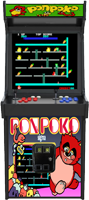
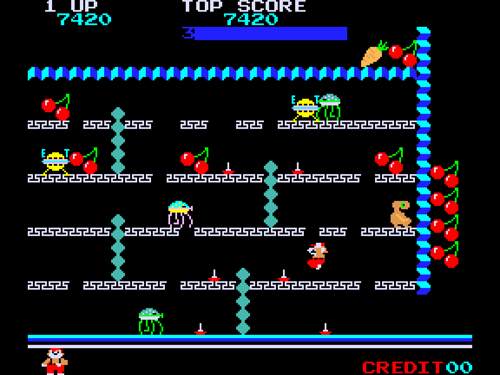
Ponpoko was a single screen platformer, originally released in Japan. In this game, you control a tanuki (a Japanese raccoon dog) that climbs ladders and jumps over enemies and gaps in the platforms. The goal is to traverse the level, collecting all of the fruits and vegetables. The enemies (called hairy caterpillars by Sigma and scorpions by Venture Line) move horizontally on the screen, pacing back and forth across it. There are also "mystery pots" in each level that can reward the player with bonus points, but certain pots may also release a snake, so collecting those pots can be a bit of a risk. It saw mild success in Japanese arcades, but I don't know if that success was met here in North America. I do know, however, that in 1984, this game was cloned over in Korea as Candory. In the early 80's, Korea had a ban on arcade and video games. That ban was lifted in 1984, and Candory was one of the games sold there at that time. While the music and text of the game remain the same, most of the graphics have been changed. Ponpoko is replaced with a Mario look-alike, the caterpillars/scorpions are substituted with alien creatures, and those snakes that hide in the pots? Well, naturally, they'd be E.T. I normally like sticking with the original game when I do screenshots for reviews…but seeing an evil E.T. try to kill Mario is enough for me to make an exception to the rule for this game. Anyway, Ponpoko is a passable platformer, but unfortunately, aside from the weirdness of the Korean version of the game, it doesn't really do a whole lot to stand out.
Review added: 08/11/2026
Pooyan
Also known as: N/A
Developer: Konami
| My Score | Avg. Score | ||||||
| 8.5 | 7.8 | ||||||
| Release Dates | |||||||
|
|||||||
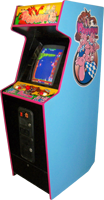
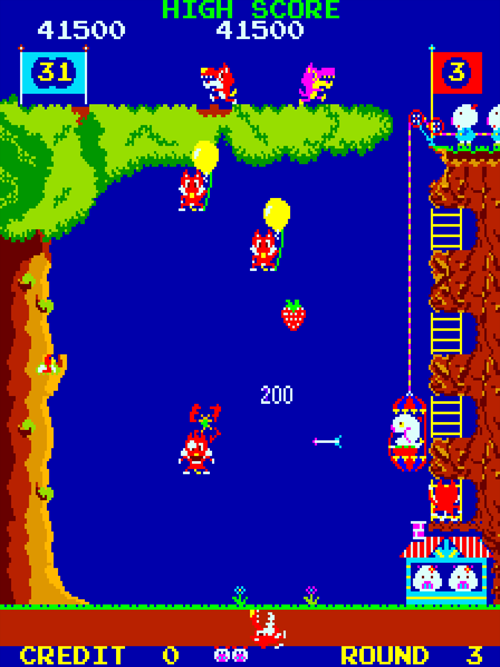
The concept of Pooyan has always seemed a bit weird to me, and perhaps that's why I've always had a soft spot for this game. I like weird stuff. Anyway, according to the arcade flyer for Pooyan, the story here is that a family of pigs has been captured by a pack of wolves. To prevent her children from being eaten, the mama pig defends her children while sitting in a cage that moves up and down on a rope. Using balloons for flotation, several wolves parachute down from a tree. As they descend, they throw stones at the mama pig to try to knock her from her cage. Ol' Mama can fight back, though, as she can shoot arrows at the wolves, as well as the occasional slab of meat. The wolves have shields that can block the arrows if Mama Pig's aim isn't exact, but a slab of meat can knock down several wolves with a single toss if timed right. If she is successful at destroying a balloon, the wolf using it will fall to their demise. If she fails, then the wolves will safely land on the ground, then climb a ladder behind her, trying to bite ol' Mama Pig. If they succeed, then you've lost a life and the baby pigs (the Pooyans) have lost their mom. The second stage is the opposite, with the wolves inflating balloons and trying to float to the top of a cliff with their goal being to get enough wolves up top to be able to push a giant boulder over the edge to crush Mama Pig. The goal is still the same, though: shoot the balloons to kill the wolves before they kill Mama Pig. Pooyan isn't a perfect shooter, but there wasn't really another shooter like it back when it was released…at a time when most shooters were still taking place in outer space, Pooyan stands out with its cartoony look and premise. I couldn't really find much info on how successful the game was in the arcades, but apparently it was liked enough that it got ported to several home consoles and computers. If you're a fan of early shooters and want to save a pig family from some hungry wolves, then Pooyan will likely be a game that you'll grow fond of, like I have.
Review added: 08/12/2026
Popeye
Also known as: N/A
Developer: Nintendo
| My Score | Avg. Score | ||||||
| 8.0 | 7.5 | ||||||
| Release Dates | |||||||
|
|||||||
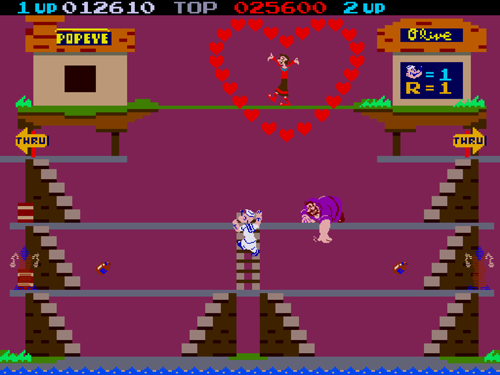
Popeye was a visually stunning game when it was released in 1982. Popeye, Bluto (Brutus), and Olive Oyl all look pretty close to what they'd look like in the cartoon. I wouldn't go as far as the arcade flyer said and say that Popeye has "sensational, lifelike graphics," but this is still a good-looking game for its time. The concept of Popeye is that you control everyone's favorite balloon-forearmed sailor as he climbs stairs and ladders, collecting the hearts, notes, and letters dropped from the top of the screen by his lady friend. You need to be fast, though. If you dilly-dally and any of those items reach the bottom of the screen and sit there for too long, Olive Oyl will come down and scold Popeye so badly that you'll lose a life. There are three different screens in this game, so you're not always traversing the same set of stairs and ladders. Each level also has different threats to avoid. Vultures, skulls, and bottles will all be sent Popeye's way. If timed correctly, Popeye can punch those harmful hazards out of the sky. Common enemies of Popeye in the cartoon and comic strip, Bluto (Brutus) and the Sea Hag, are here as well. Bluto stalks Popeye through the level constantly, while the Sea Hag just appears to throw stuff at our favorite sailor that he must avoid or destroy. Swee'Pea and Wimpy also make appearances in the game. Popeye is a solid game, often considered to be a platformer, but Popeye cannot jump in this game. All you can do is move left, right, or climb up/down stairs and ladders…and, of course, eat an occasional can of spinach so you can knock that blubbery bully Bluto out of the way with a right cross. Anyway, if you like the concept of Donkey Kong and want to play something similar, but without the jumping and with a focus on moving all over the level to collect objects rather than simply trying to reach the top of the stage, then Popeye may be right up your alley…well, blow me down.
Review added: 08/13/2026
Puck-Man
This game is listed on this website under a different name. To access the review, please click here.
Punching Kid
This game is listed on this website under a different name. To access the review, please click here.